

A legal home for your family, on your land.
Custom Tiny Homes in Hawaii
We check your lot before you pay anything, then build a home you get to keep.
- Custom built for your lot
- Every Hawaiian island
- Permits and inspections handled
- Free lot check, no pressure
Lot first. Home second.
In Hawaiʻi, the home is the easy part.
The hard part is whether it’s legal on your lot. Zoning, water, wastewater and access settle that, not the model you fall in love with. Ask around and you’ll hear the same stories: a deposit paid on a home the lot couldn’t take, approved plans sitting in a drawer, a house built without a permit that the family has worried about for years.
So we start where the trouble starts. Before you choose a design or pay anything, we look at your lot and tell you what you can build there. Then one team designs your home, handles the permit and stays with it through the final inspection.
Contact UsOur builds
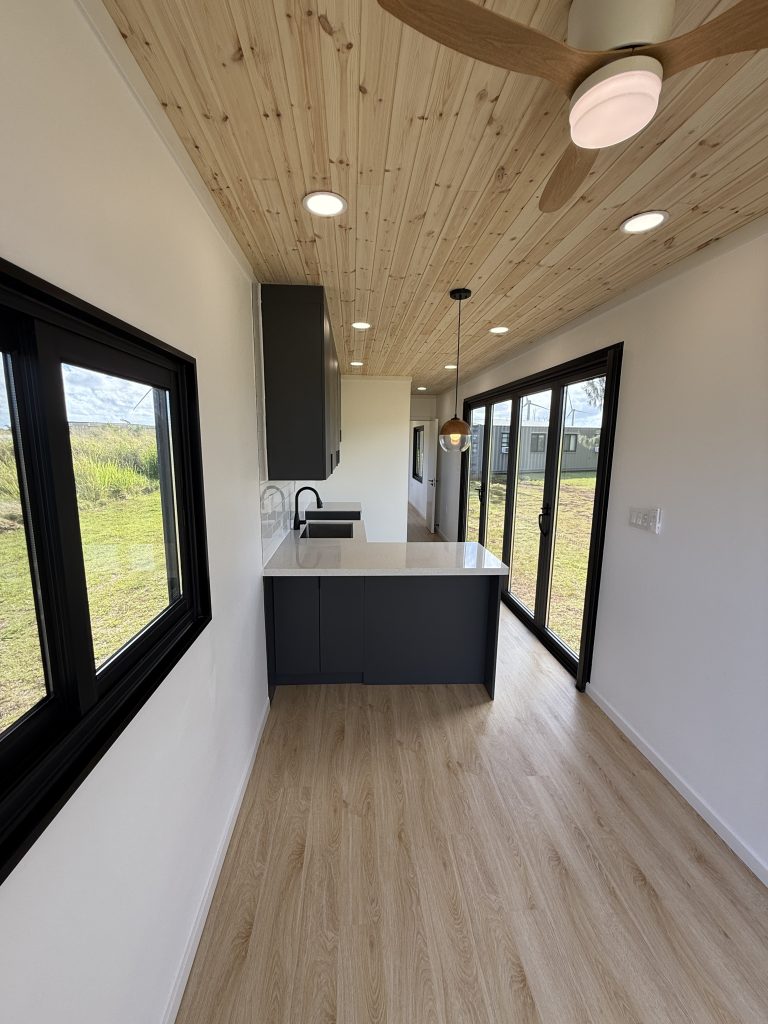
Built for one family, on one lot.
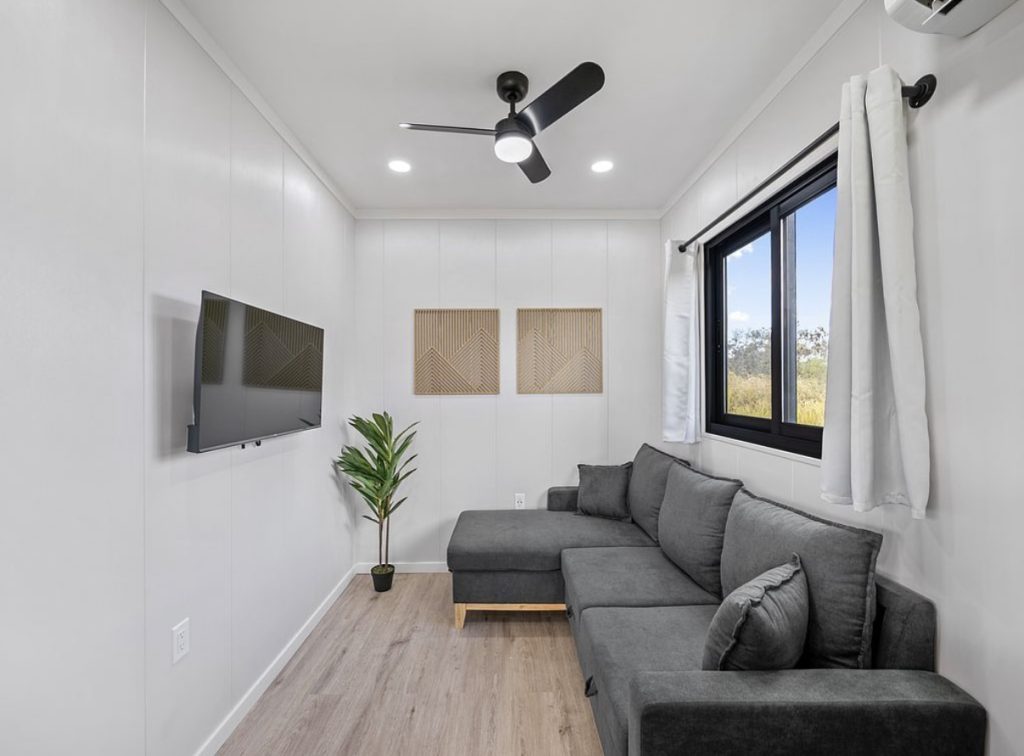
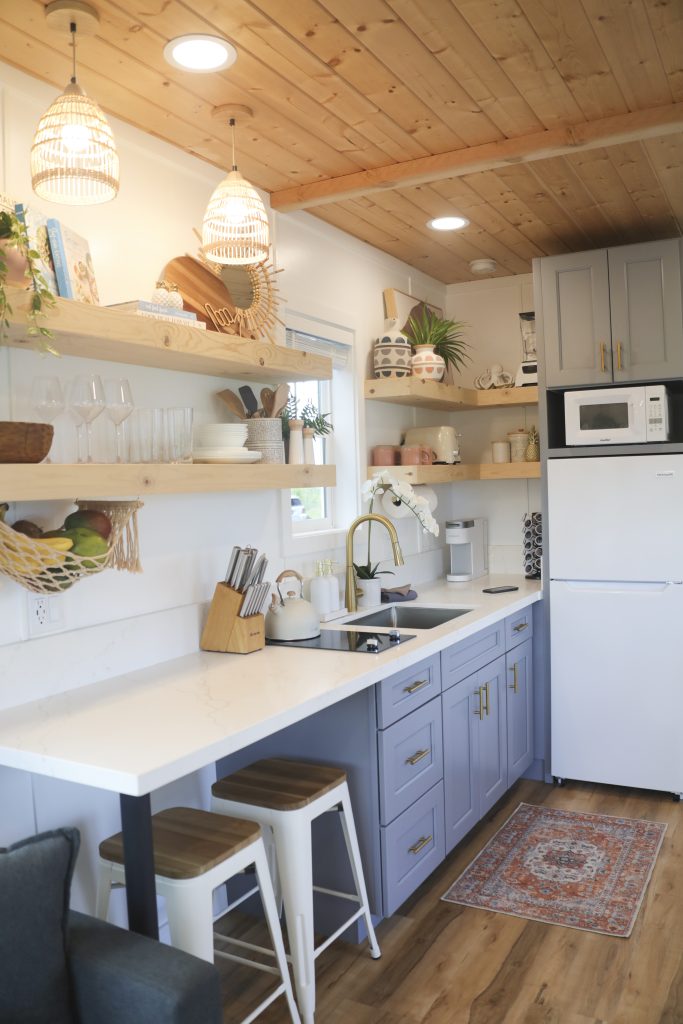
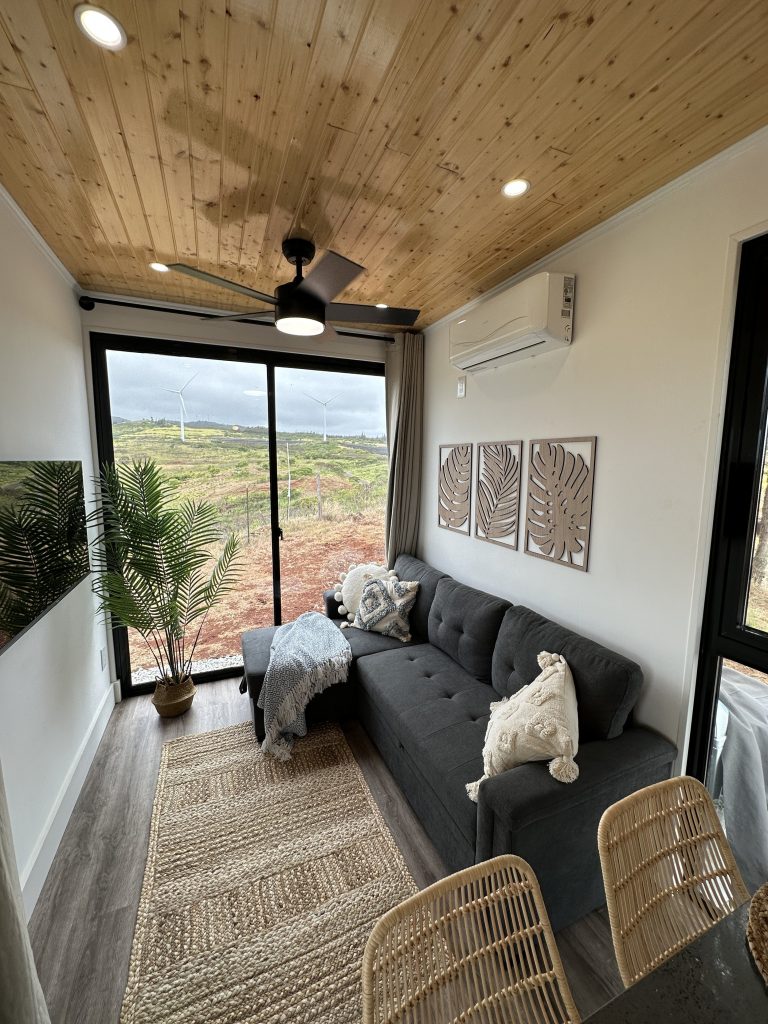
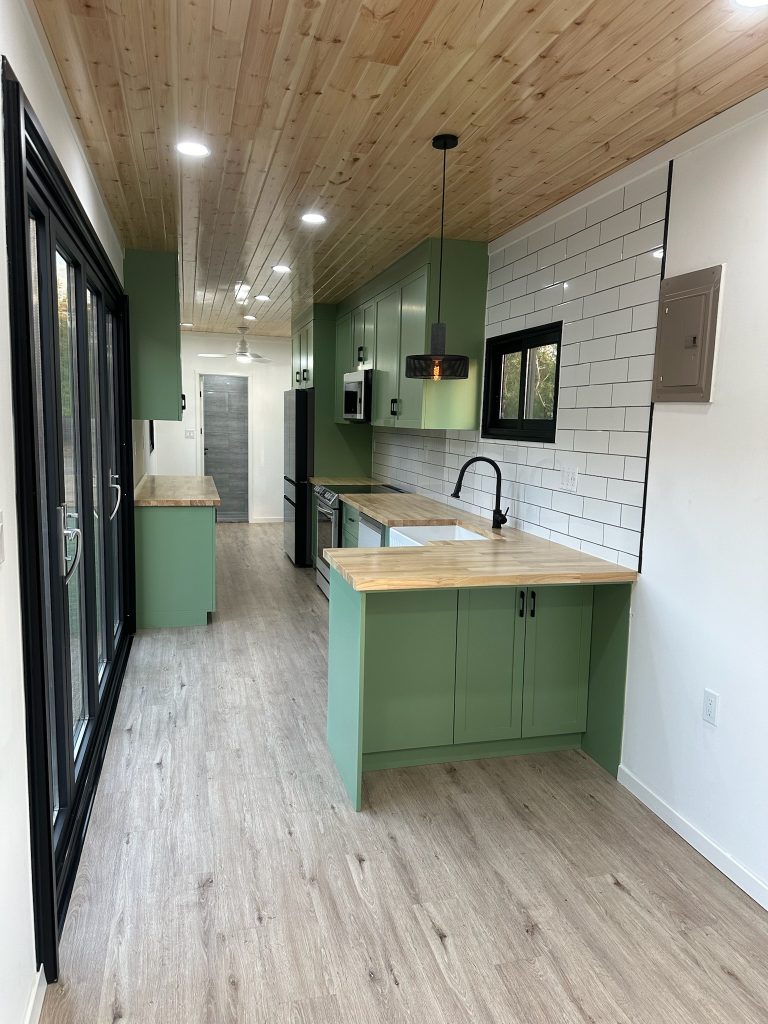
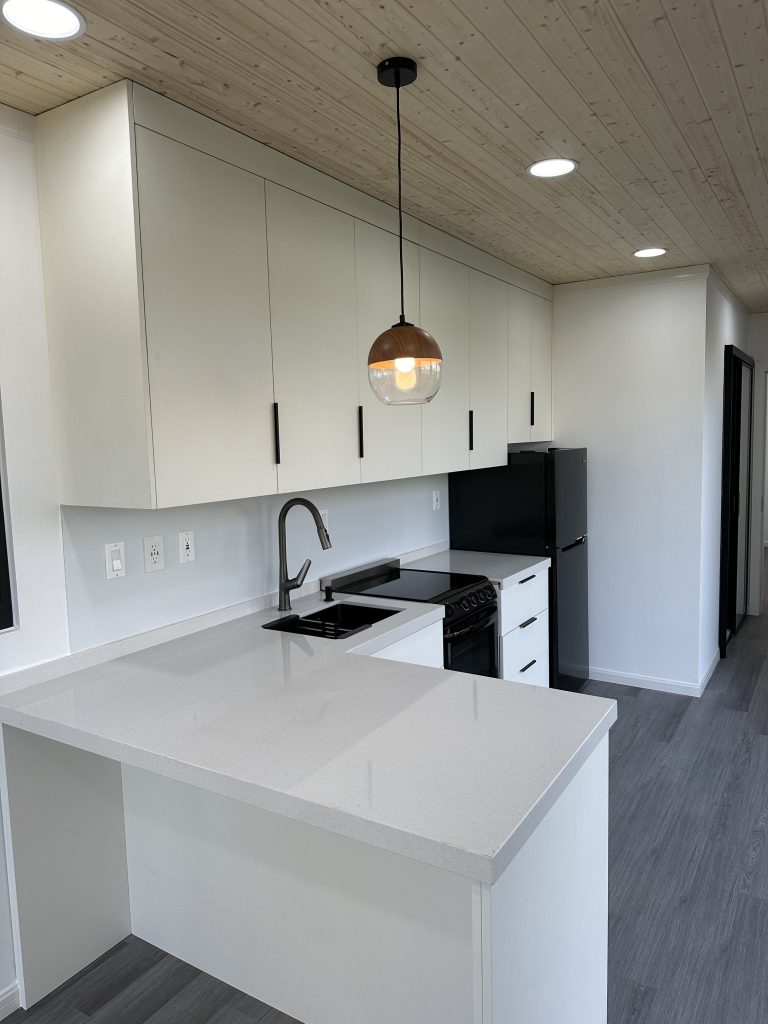
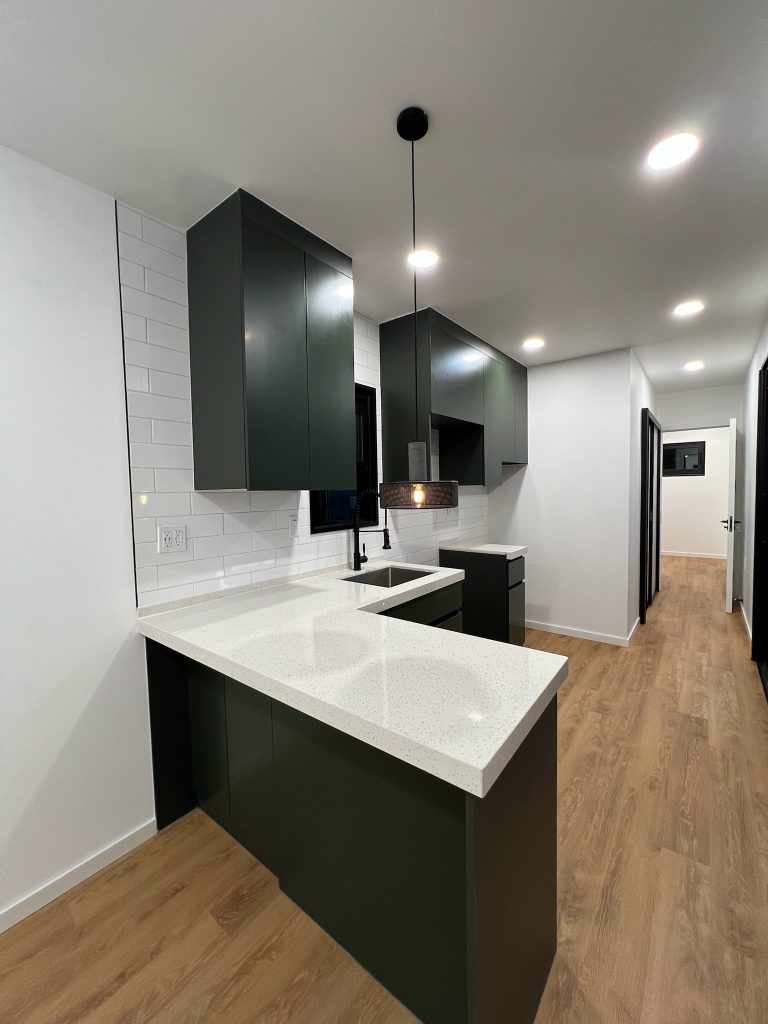
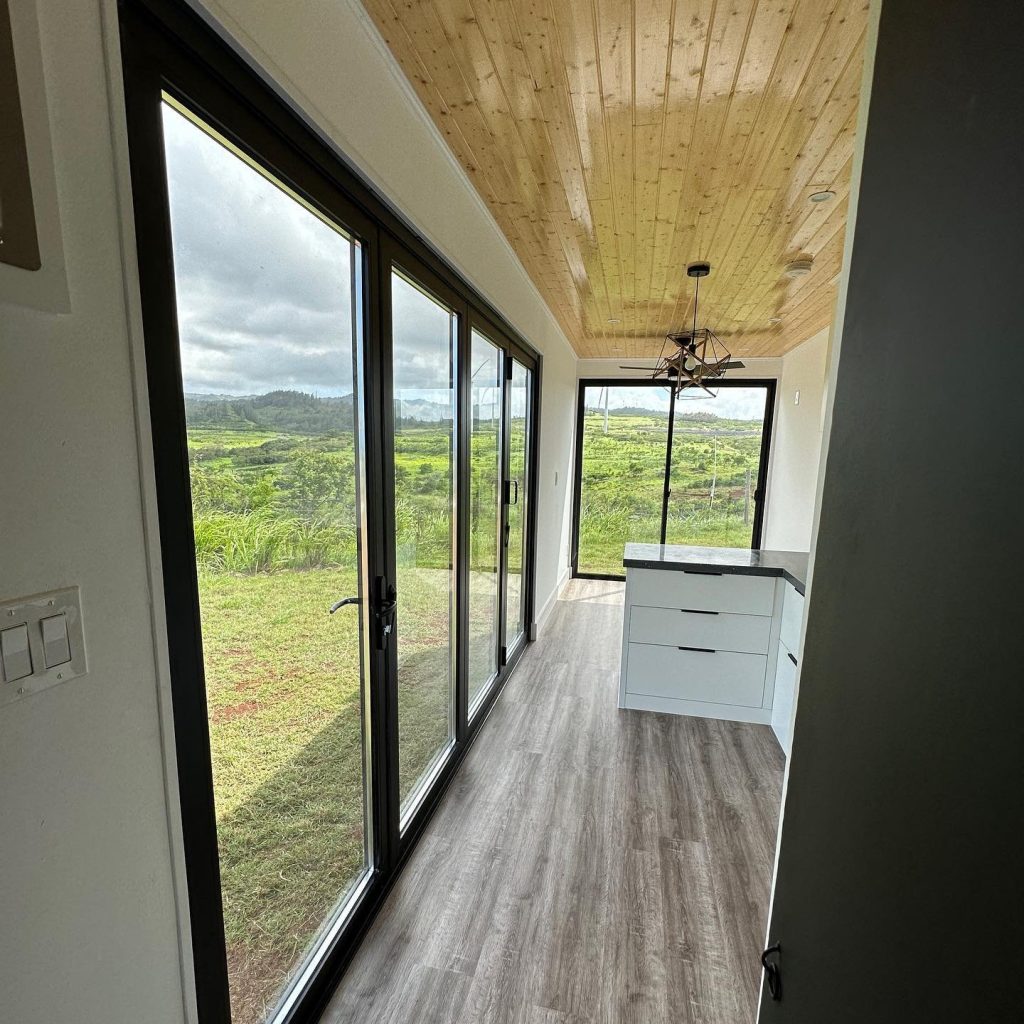
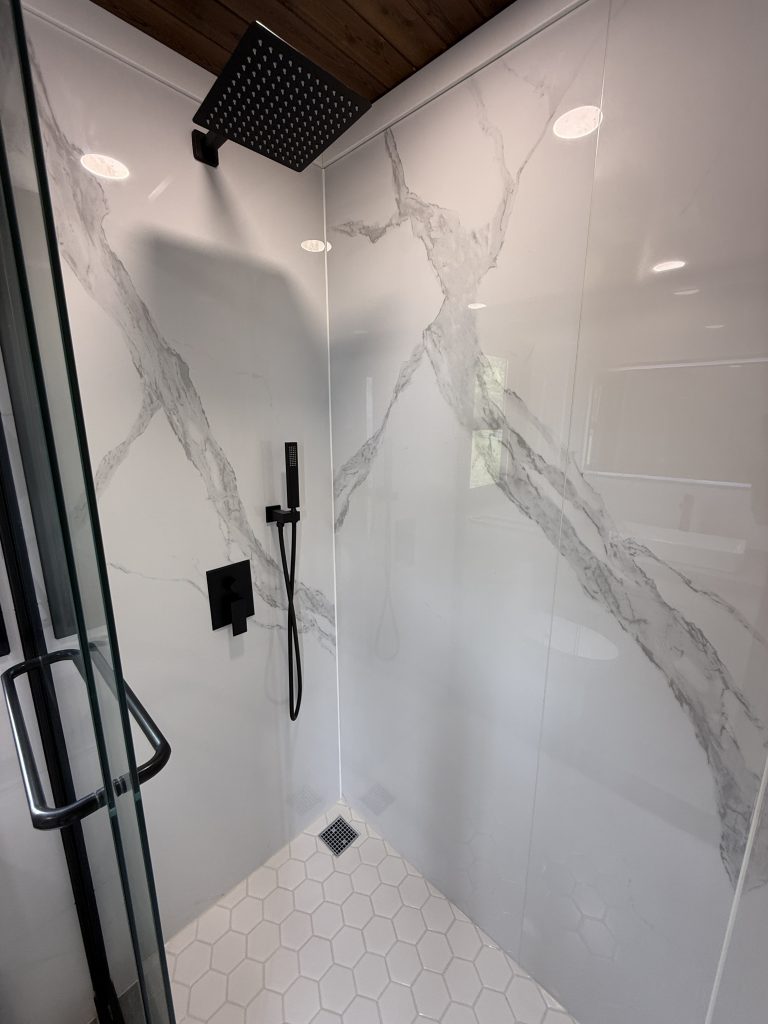
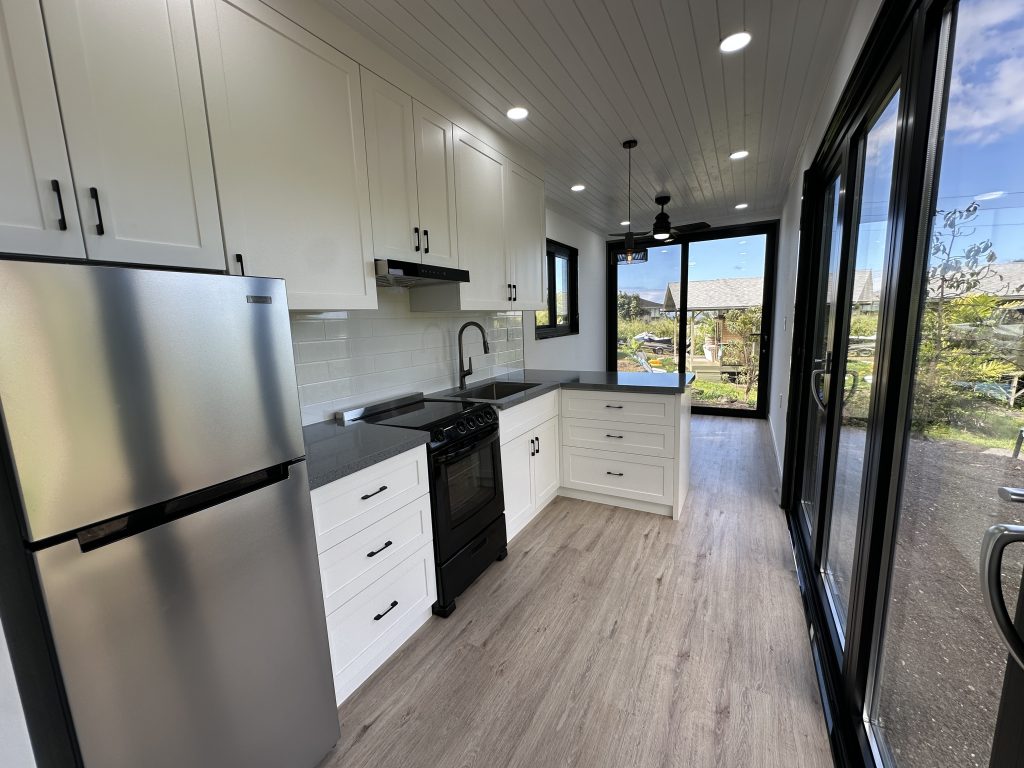
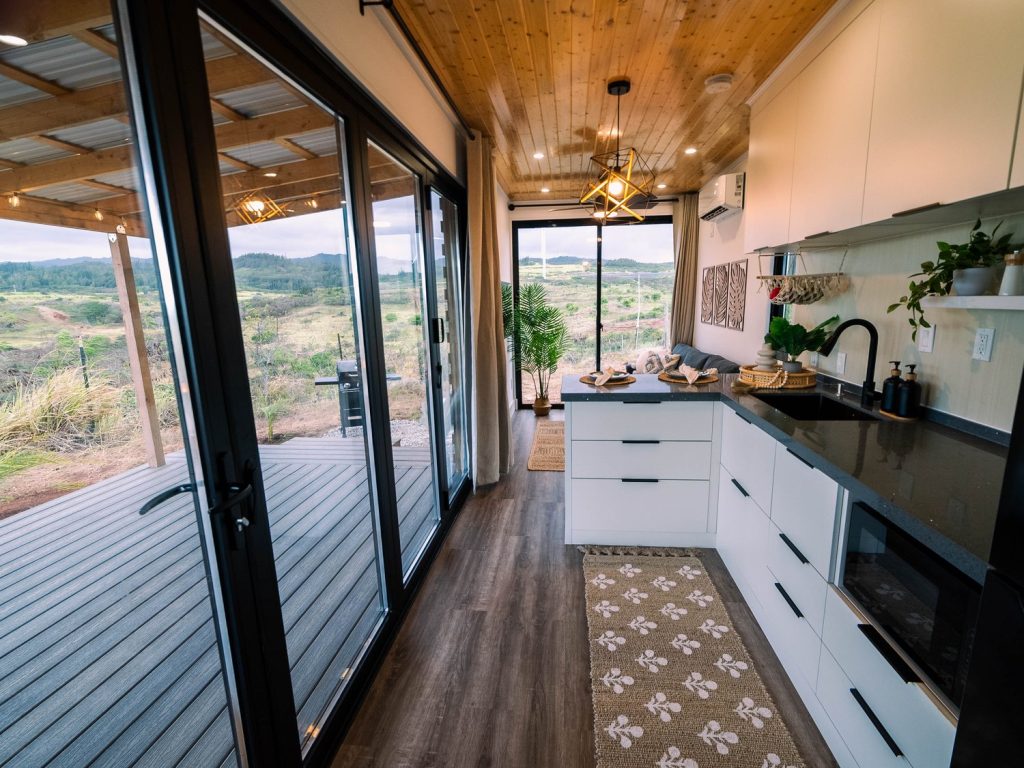
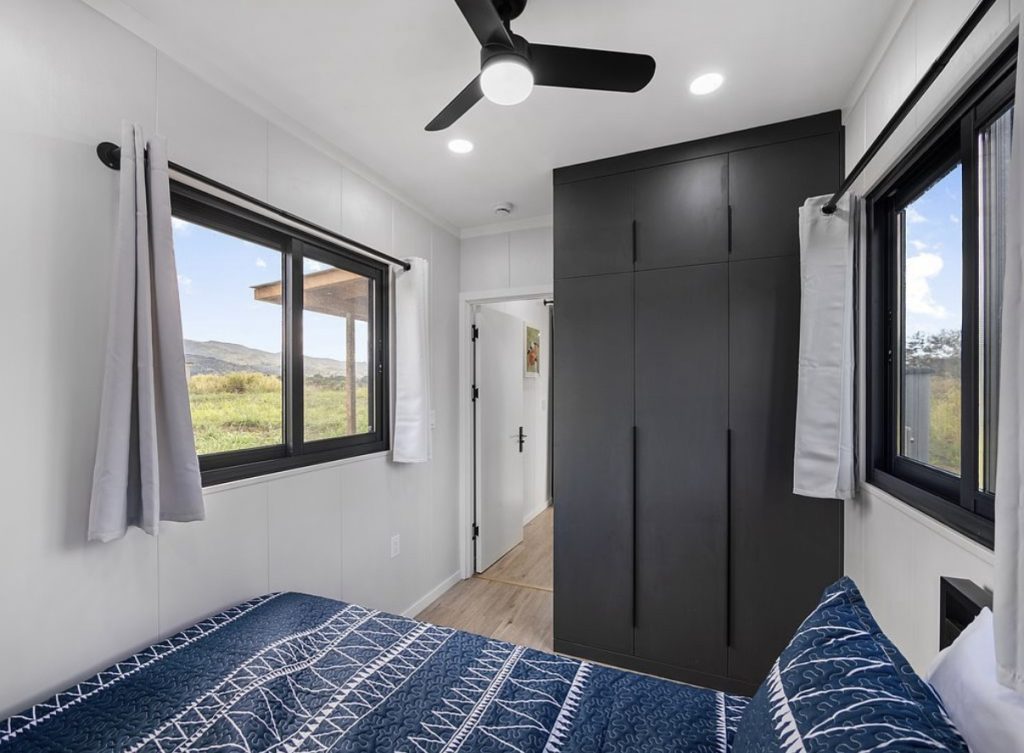
Every home we build is drawn for the land it sits on and the people who’ll live in it. Here are a few kitchens and rooms we’ve built. Borrow any idea you like.
How it works
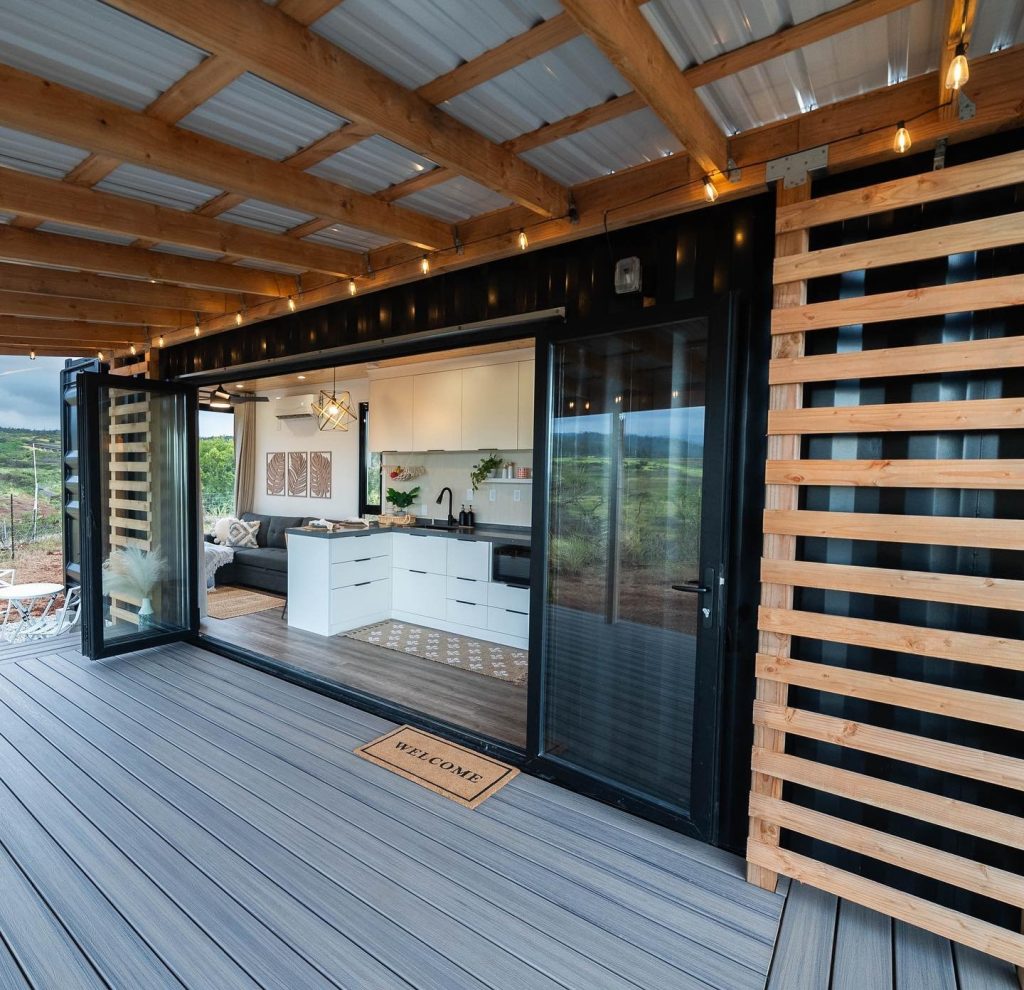
One team, from lot to keys.
Step 1: Free lot check
Call or send a message. Tell us which island your lot is on and who the home is for. We look at the zoning, water, wastewater and access, then tell you plainly what you can build. No cost, and no pressure to go further.
Step 2: Design and one price
We design a home around your lot, your family and your budget. You get one written price for the finished home on your island, with a plain list of what’s included and what isn’t.
Step 3: Permit, build, install
We file the permit, bring in licensed electricians and plumbers, deliver and set the home, and stay through the final inspection. Your payments follow the work, so you never pay far ahead of it.
Every home is subject to county permit and Department of Health wastewater approval.
Why build with us
No surprises after you sign.
Drawn for your land
Your home is designed around your lot, your setbacks and the people living in it. Want one level, wide doors and a walk-in shower? Just ask.
Permits handled
We draw the plans, file the permit and deal with the county, so you’re never stuck between a seller and the building department.
One price, installed
Your written price covers the home delivered to your island and set on your lot. No surprise bills for electrical, plumbing or site work later.
Made for island weather
Built for strong sun, salt air, heavy rain and termites, to the code your county enforces when you apply.
Reviews
Families who built with us.
Sample review
We’d been told three different things about what we could build behind my mom’s house. They checked the lot first and gave us a straight answer. The permit went through, the inspector signed off, and my mom finally sleeps at night.
Leinani K.Hilo, Hawaiʻi Island
Sample review
The price they wrote down at the start is what we paid. No extra bill for the septic, no extra bill for the electrical. Out here that almost never happens.
Dennis and JoyKula, Maui
Sample review
Our son and his kids live fifty steps from us now. Same lot, their own front door. Every payment matched a stage of the work, so we never felt like we were handing money to strangers.
Rowena T.Kāneʻohe, Oʻahu
Sample reviews. Real Google reviews go here before launch.
Contact UsAreas we serve
Every island, its own rules.
We build tiny homes and ʻohana units across Hawaiʻi. Each county decides what you can put on your lot, so pick your island to see what applies to yours.


Questions
Straight answers, before you call.
Can I legally live in a tiny home in Hawaiʻi?
Yes, if it sits on a permanent foundation and is permitted as a home. Depending on your lot, that can be an accessory dwelling unit (ADU), an ʻohana unit or a small main house. Each county decides what your lot allows, based on zoning, lot size, water and wastewater. A tiny house on wheels is different: to live in one full time, plan on setting it on a foundation and permitting it like any other home. Every home is subject to county permit and Department of Health wastewater approval.
How much does a tiny home cost in Hawaiʻi?
Less than a full-size house, but more than most prices you see online, because those usually cover the home alone. In Hawaiʻi the finished cost also includes shipping to your island, the foundation, a septic or sewer connection, licensed electrical and plumbing, permit fees, general excise tax and site work. Your lot moves those numbers more than the model does. That’s why we give you one written price for the finished home on your lot, after the free lot check.
What’s the difference between an ADU, an ʻohana unit and a tiny home?
They overlap, which is why so many people mix them up. An ADU (accessory dwelling unit) is a second, self-contained home on a lot that already has one. An ʻohana unit is a second home meant for family. On Oʻahu, an ʻohana unit has to be lived in by relatives of the family in the main house, while an ADU there can be rented long term. “Tiny home” describes size, not a type of permit: Kauaʻi’s county code, for example, treats a home of 500 square feet or less, not counting lofts, as a tiny house. Which one fits depends on your county and your lot.
Can I put a tiny home on my family’s land?
Often, yes. A 2024 state law, Act 39, requires every county to allow at least two ADUs, or the reasonable equivalent, on residentially zoned lots by December 31, 2026. Honolulu already allows one ADU plus one ʻohana unit alongside a single-family home. What fits on your lot depends on its zoning and size, water and wastewater, and any HOA rules or covenants. Agricultural land has its own, tighter rules. The free lot check tells you which apply to yours.
Why not just build without a permit?
Plenty of people do, and plenty regret it. An unpermitted home is like a car with no title. You can live in it, but a lender generally won’t finance it, it’s harder to sell for what it’s worth, and the county can fine you or order it changed or torn down. It can also leave your children a problem instead of a home. A permit costs more up front. It usually costs far less than fixing an unpermitted home later.
What happens when I call?
You talk to someone on our team about your lot: which island, roughly where, who the home is for and what you want to spend. We tell you what you can likely build and what the next step would be. A site visit, a written price and a timeline come after that, and only if you want them. In Hawaiʻi the permit often takes longer than the build, so we’ll be honest about time too. There’s no charge and no pressure, and you’ll get a straight answer even if you never build with us.
Contact
Start with your lot.
Call or send a message. Tell us your island and a little about your lot, and we’ll call you back to talk through what you can build. It’s free, and there’s no pressure to go further.
(808) 000-0000